One tiny server per board.
Everything else talks to it.
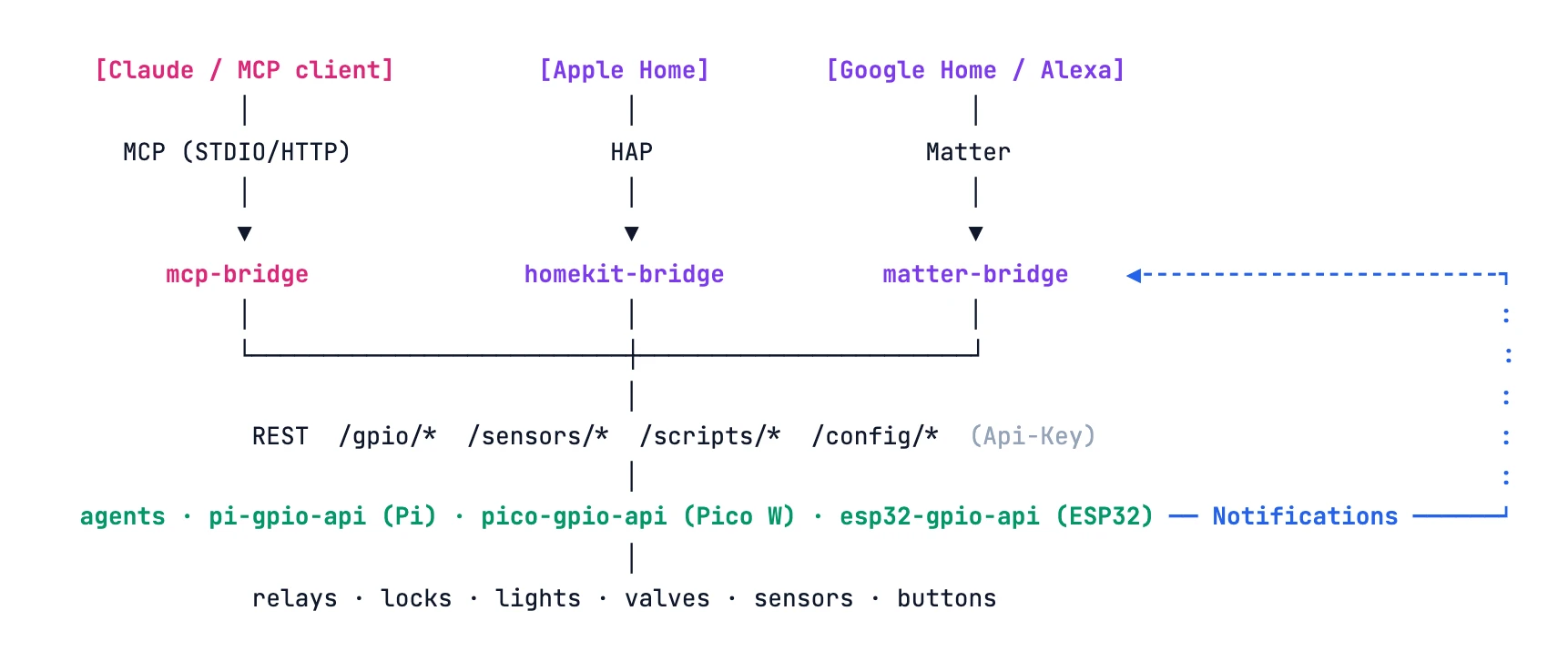
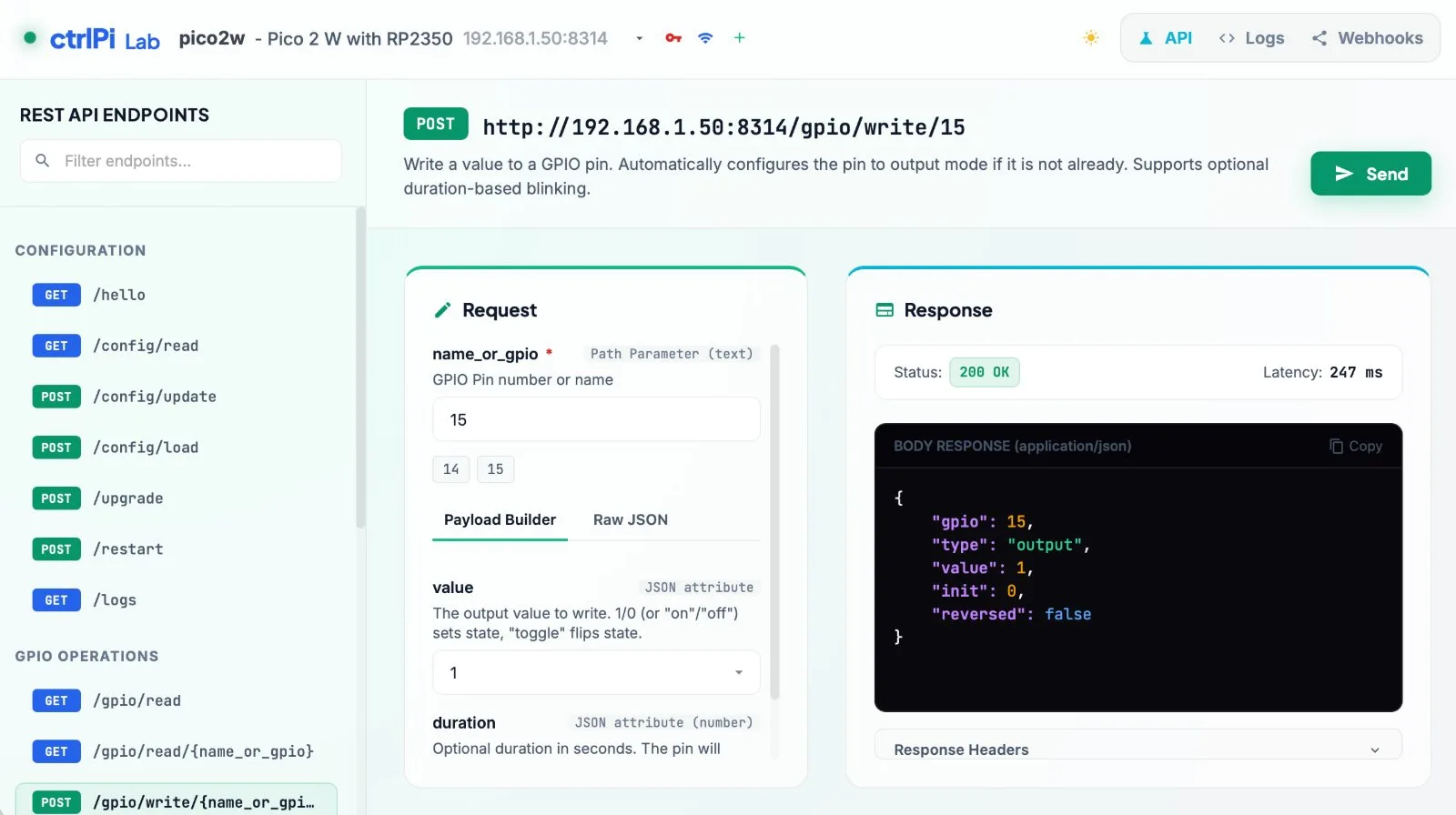
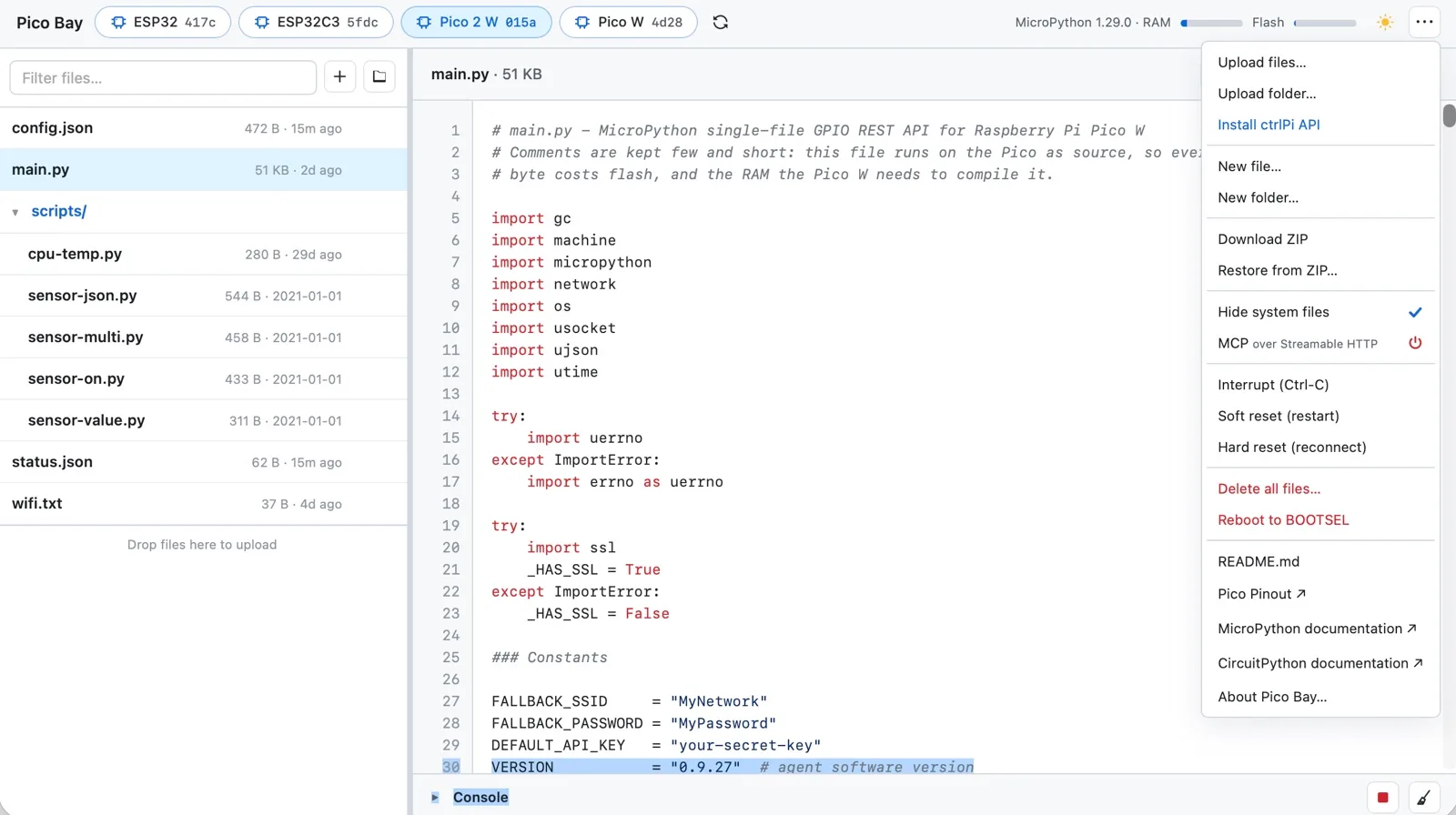
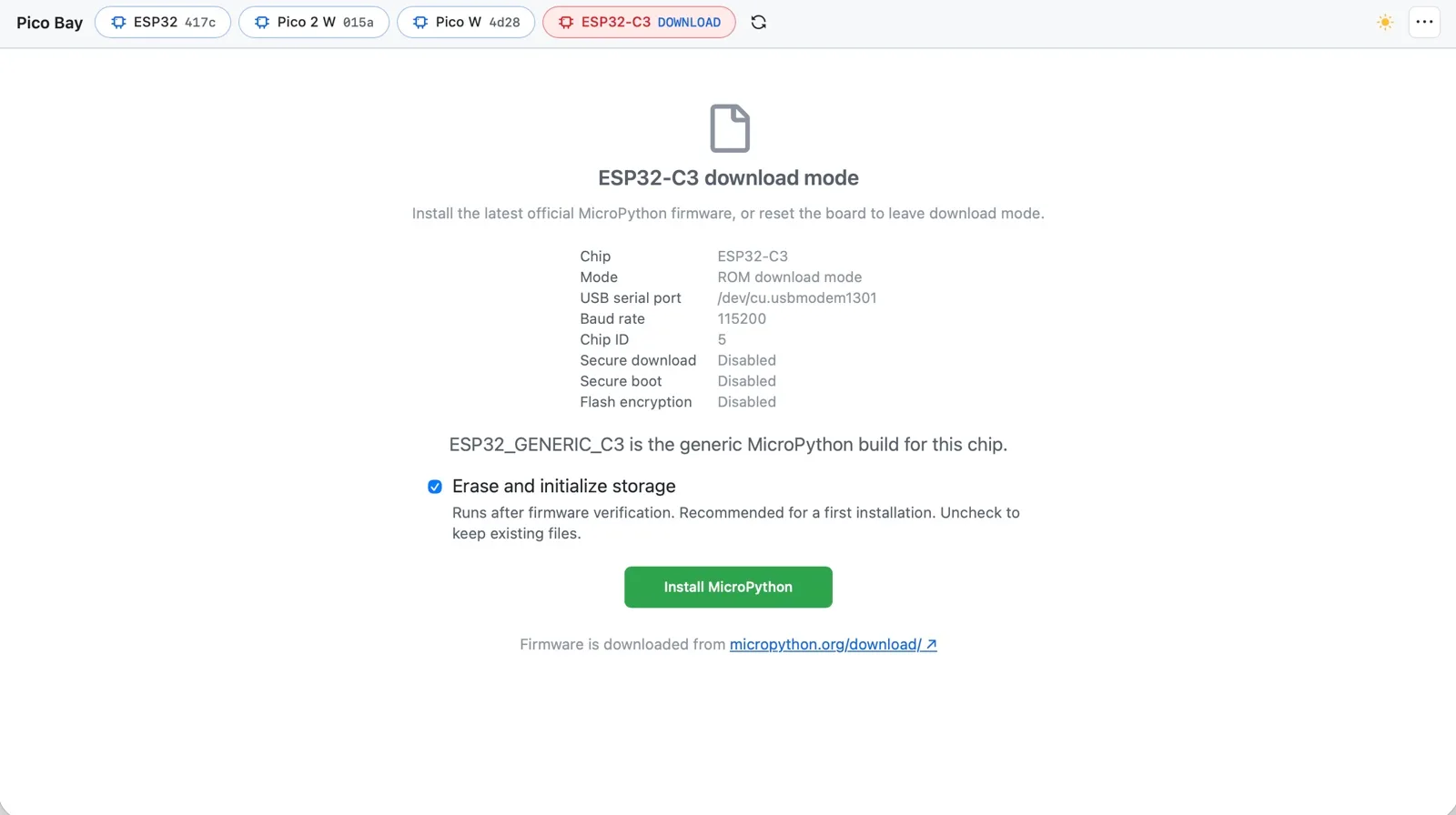
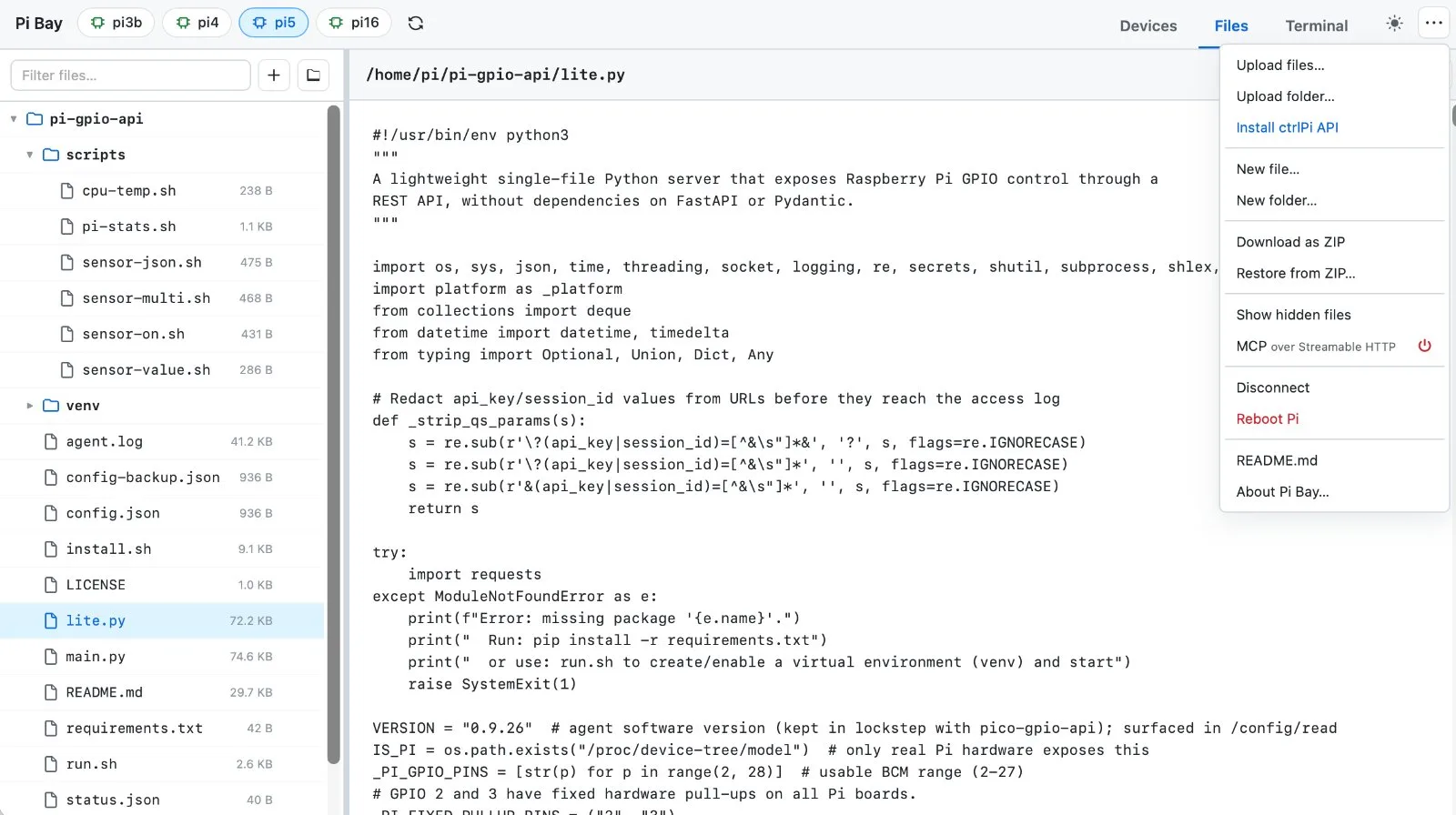
It starts with an agent, a small, zero-fuss server you drop on a Raspberry Pi, a $6 Pico W, or an ESP32 from $4. It exposes every GPIO pin over a clean REST API: read, write, pulse, watch. From there, the rest of the family builds up: smart-home bridges make your pins show up in Apple Home and Google Home, an MCP server hands the keys to AI assistants like Claude, and webhooks push every change back to you in real time. Each piece is a small, standalone, MIT-licensed project, use one, or use them all.
Agents: the muscle
A single-file REST server on the Pi, Pico W, or ESP32 drives the pins: outputs, inputs, pull-ups, pulses with auto-revert, reversed relay logic, and webhooks on every change. Sensors too: point one at a small script and read temperature, humidity or anything else with one call. Same API across boards, clients never care which one answered.
Bridges: the control
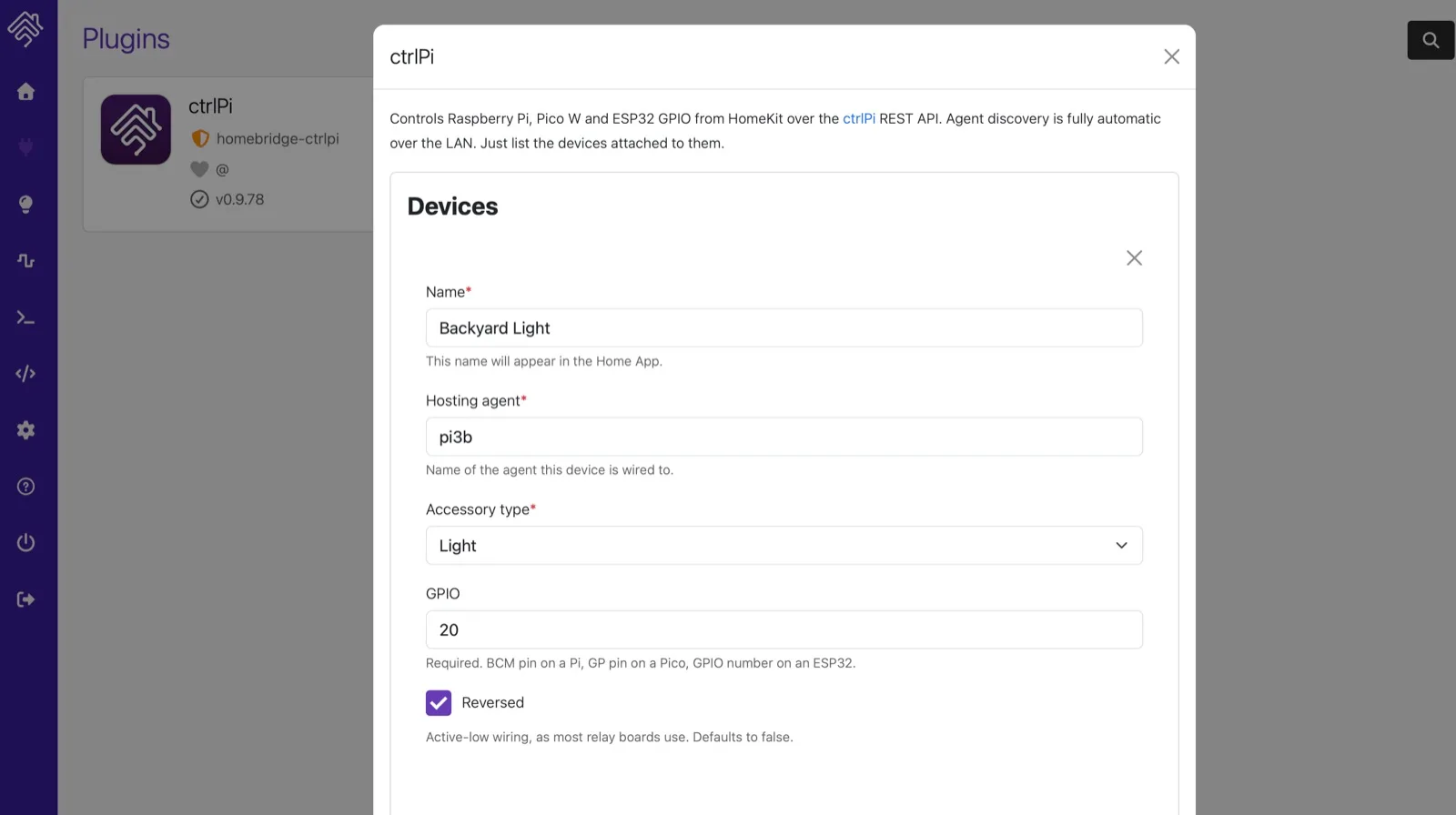
Bridges bring your devices into Apple Home, Google Home, Amazon Alexa and any other Matter ecosystem, or any system you build yourself with the API. Lights, locks, garage doors, valves, sensors, buttons, all driven through the agents' API. Pair once, control from your phone, your watch, or your voice.
MCP: the brain
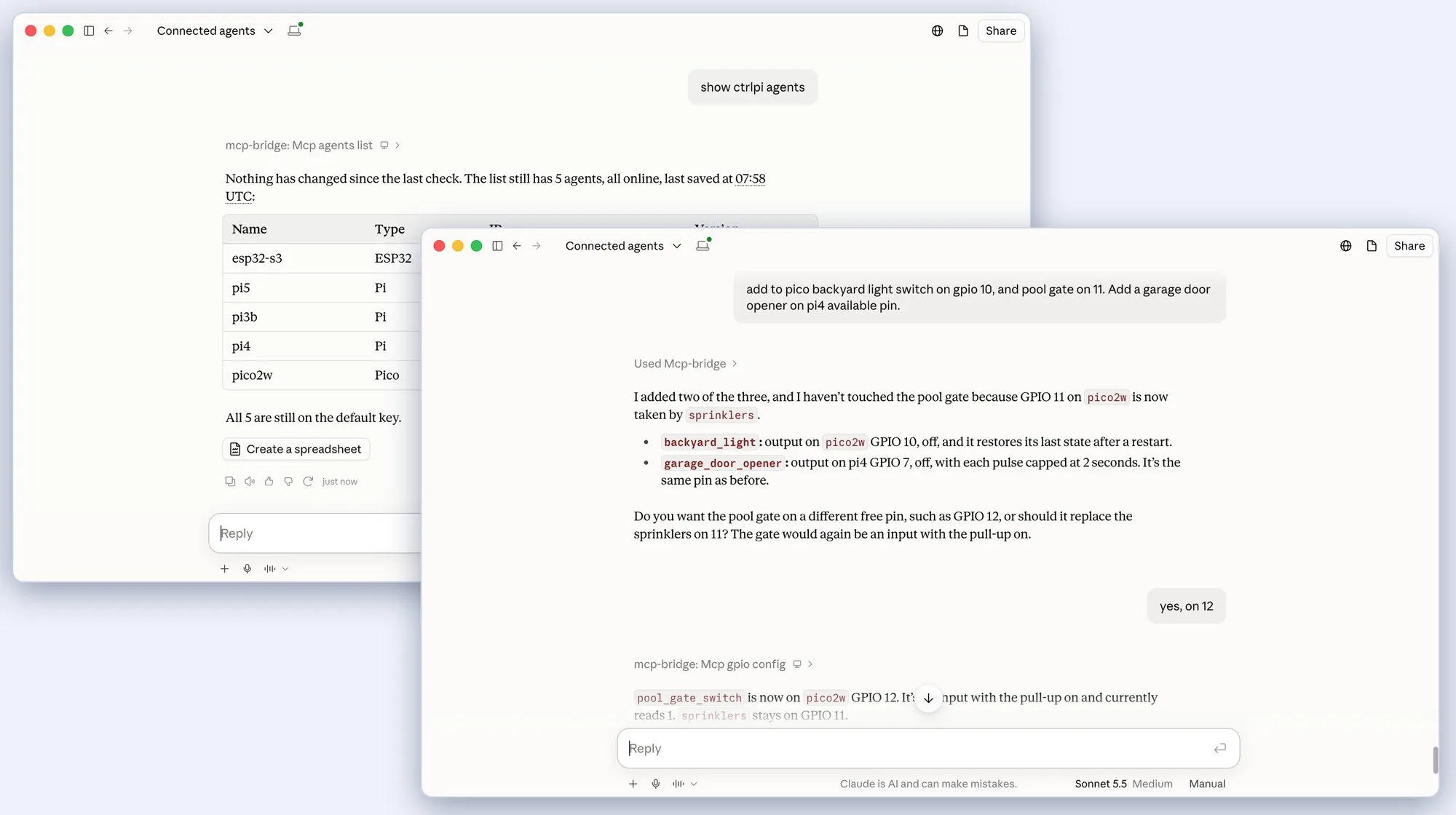
A zero-dependency Model Context Protocol server exposes the whole GPIO surface as tools. Ask Claude to scan your LAN for agents, flip a relay, pulse a pin, read a temperature sensor, or watch a door sensor, in plain language. It works with Claude Desktop, Claude Code and any other MCP client, over STDIO or HTTP.